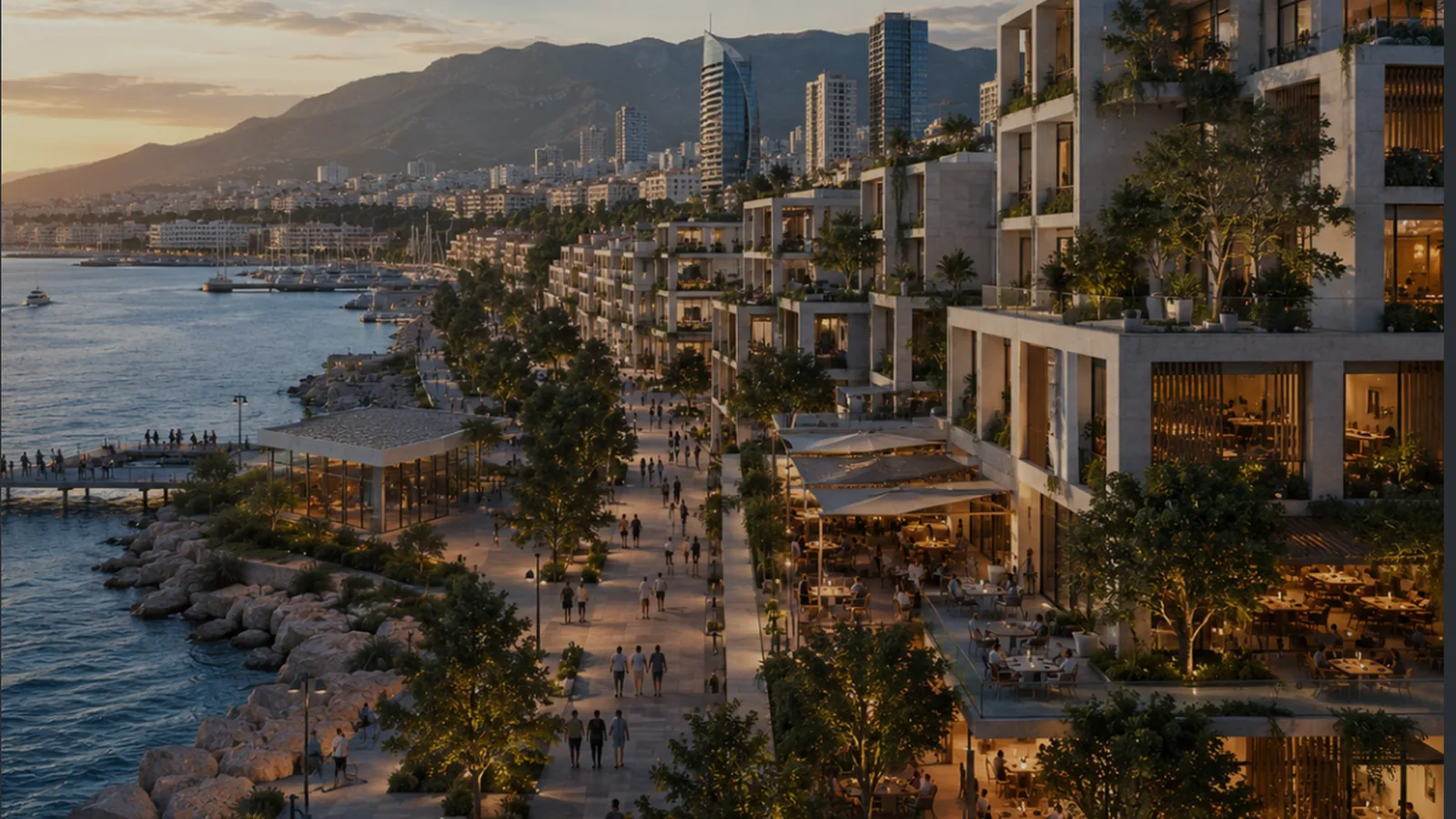
01 — THE NEED THE SYSTEM SERVES
Across cities, coastlines and mixed-use territories, hospitality is often introduced through identities and operating models defined before the place itself is understood. A project may be professionally designed and operated yet remain detached from its climate, urban grain, landscape, public life, food culture, material intelligence and everyday rhythms.
EPTT exists to establish contemporary Urban, Coastal and Mixed-Use hospitality as one coherent territory-led system. The territory is not an address, backdrop or decorative reference. It becomes the source of the project’s identity, architecture, atmosphere, public relationship and long-term relevance.
EPTT is a Governed Hospitality System for contemporary Urban, Coastal and Mixed-Use hospitality, structured around Engagement Protected Through Territory: an active and voluntary relationship with the climate, architecture, public life, culture, food, landscape, people and everyday rhythms of one place.
EPTT is structured around Engagement: an active and voluntary relationship with the life surrounding the project. Engagement remains available and credible while privacy, protection and freedom of participation remain fully preserved.
02 — THE HOSPITALITY CONCEPT
Territory-led hospitality produces a project in which place precedes formula. Climate, landscape, urban context, culture, movement, public life, gastronomy and patterns of inhabitation determine how hospitality is configured, how architecture responds and how the project participates in its surroundings.
Architecture responds to place rather than carrying one predetermined style. Form, orientation, shade, ventilation, materiality, thresholds, public interfaces, landscape and interior–exterior relationships emerge from the actual territorial condition. Restaurants, cafés, workspaces, cultural uses and shared environments may contribute to surrounding life where they belong naturally to the project and are supported by genuine demand.
Hospitality remains complete, contemporary and professionally operated. Engagement is not produced through compulsory programming, spectacle or permanent activation. The project creates credible relationships between public, shared, private and protected conditions so that participation remains possible without becoming imposed.
The concept can be stated in one line: hospitality follows territory, architecture responds to place and Engagement emerges through their alignment with surrounding life.
03 — THE ASSET AND ITS PREFERRED TERRITORIAL CONTEXT
The concept can produce different physical assets because Urban, Coastal and Mixed-Use territories create different development conditions. Every project begins with one legible typology and develops from the realities of that place rather than from a repeatable visual or operating prototype.
- Territory, climate and surrounding life establish the project before brand identity, programme or architectural image.
- Architecture is contemporary, climate-responsive, humanly scaled and materially credible to its location.
- Accommodation, public spaces, gastronomy, workspaces, landscape and compatible residential components are coordinated as one environment where applicable.
- Public and shared spaces connect the project to surrounding life while preserving privacy, protection and operational control.
- The project contributes to the identity and activity of its city, coast or wider development rather than functioning as an isolated hospitality object.
- Each project remains specific enough that it cannot be transferred mechanically to another territory without losing meaning.
EPTT belongs in territories where contemporary hospitality can emerge credibly from urban life, coastal conditions or genuine mixed-use coexistence. The preferred context is not a predetermined destination list. It is a place capable of generating the complete project from its own climate, identity, movement, public life, development structure and long-term needs.
| Context | What it offers the system |
|---|---|
| Urban | Contemporary hospitality integrated into cities, neighbourhoods, business and innovation districts, regeneration areas and everyday urban life. |
| Coastal | Place-led coastal hospitality shaped by climate, openness, vegetation, coastline, waterfront conditions and local patterns of life. |
| Mixed-Use | Hospitality integrated with residences, retail, gastronomy, culture, workspaces and public life within a genuine wider development condition. |
These are territorial conditions rather than destinations or market segments. The selected typology clarifies the project’s governing development condition, while the actual territory determines its architecture, atmosphere, programme and operating expression.
04 — WHAT MAKES THE SYSTEM DIFFERENT
Several hospitality and development categories may use local architecture, materials, food or public-space references. EPTT differs because the territory governs the complete system rather than being added to a project whose essential identity and structure were defined elsewhere.
| Adjacent category | How EPTT differs |
|---|---|
| Generic international hotel | A generic international hotel begins with a transferable identity and adapts its surface to location. EPTT begins with the territory and allows it to determine architecture, public relationships and operating expression. |
| Project-specific bespoke concept | A bespoke concept may respond strongly to one place but remain vulnerable to fragmentation as teams and decisions change. EPTT provides an institutional architecture established before the individual project. |
| Destination resort | A destination resort may separate the property from surrounding life. EPTT creates a controlled relationship with city, coast or wider territory while preserving privacy and protection. |
| Conventional mixed-use development | A conventional mixed-use scheme may assemble hospitality, residences, retail and work as separate components. EPTT aligns them around one territorial and hospitality logic. |
| Territorially themed property | A themed property applies local references to create an image. EPTT requires territory to alter the project’s structure, architecture, atmosphere, public interfaces and operations. |
Stated positively: EPTT is contemporary Urban, Coastal and Mixed-Use hospitality in which territory generates identity, architecture responds to place, hospitality contributes to surrounding life and Engagement emerges through their alignment.
05 — HOW THE SYSTEM OPERATES
The operating logic follows the project’s territory and selected typology. Hospitality functions remain recognizable and professionally managed, but their configuration responds to the place rather than to one transferable operating formula.
- Service is reliable, responsive and appropriate to the scale, social intensity and privacy of the selected typology.
- Public and shared spaces support meaningful relationships with surrounding life without creating uncontrolled exposure or compulsory interaction.
- Restaurants, cafés, workspaces, cultural uses and other public interfaces connect to genuine local demand, climate and patterns of use.
- Architecture, landscape, infrastructure, logistics and security are coordinated so the project remains territorially credible and operationally robust.
- Branded residences may be integrated where compatible with the typology and project configuration, without creating a separate identity or weakening hospitality as the institutional reference.
An operator is appointed by the Project Owner and remains responsible for staffing, service delivery, revenue management and operating performance. Local, regional or international operators may be compatible. Each establishes the commercial execution suited to the project and its market within EPTT’s established territorial logic, selected typology, positioning and operating principles. The operator executes the asset; it does not become its author.
06 — THE ECONOMIC LOGIC
Territorial integration can support a viable hospitality asset because EPTT connects the project to urban relevance, coastal identity or genuine mixed-use vitality while preserving coherent architecture, public relationships and operations. Value comes from creating an asset that contributes to the life and long-term relevance of its territory rather than merely occupying a location.
| Characteristic | Economic consequence |
|---|---|
| Territorial specificity | A project that belongs unmistakably to one territory can establish differentiation and pricing defensibility that do not depend on imported branding alone. |
| Typology matched to actual place | Selecting the project form from a real Urban, Coastal or Mixed-Use condition avoids forcing one universal product into incompatible development contexts. |
| Climate-responsive architecture | Form, shade, ventilation, material intelligence and outdoor relationships can support comfort, resilience and operating coherence before technical systems compensate for design. |
| Credible public interfaces | Restaurants, cafés, workspaces, cultural uses and shared spaces may connect the project to genuine local demand and complementary revenue where the territory supports them. |
| Integrated mixed-use relationships | Where genuine coexistence exists, hospitality, living, commerce, work and public life can reinforce the relevance and durability of the wider development. |
| Identity beyond one operator | Because identity is carried by territory, architecture and project relationships, the asset can remain distinct through changes of operator, brand expression and market cycle. |
These characteristics explain how EPTT can create value. They are not a forecast. Rate, occupancy, cost structure, capital requirement, operating performance and return depend on the territory, typology, site, market, programme, operator and project configuration, and are established through a financial model calibrated to the actual project.
07 — WHAT THE SYSTEM PROVIDES
EPTT is not a public hotel brand, a standardized design language or a project-specific concept awaiting development. It is a complete institutional territory-led hospitality system, developed before any individual project and made available for project-specific application through the applicable GHS Project Package and dedicated GovHos AI environment.
| Domain | What is already defined |
|---|---|
| Hospitality concept | The territory-led form of hospitality itself: how the project participates in surrounding life, how Engagement is made available and what the environment must protect. |
| Doctrine and identity | The founding doctrine, the territory-before-formula principle and the identity standards through which EPTT is expressed without a repeated visual prototype. |
| Territorial logic | How climate, urban or coastal context, landscape, movement, public life, culture, food, material intelligence and the relationship between engagement and protection are read and assessed. |
| Typologies | The three territorial typologies and the method through which one governing Urban, Coastal or Mixed-Use condition structures programme, public relationships and operations. |
| Architecture and interiors | The climate-responsive and place-led architectural logic through which territory, material intelligence, human scale, atmosphere, interiors, landscape and public interfaces structure the project. |
| Operational logic | The service model, public and shared spaces, gastronomy, workspaces, culture, protection, logistics and operator translation required by EPTT. |
| Economic framework | The value logic of territorial integration, climatic intelligence, urban or coastal relevance and the modelling method through which project economics are established. |
| Operator compatibility | What an operator must be capable of and how local, regional or international standards are integrated without replacing territorial identity. |
| Structural governance | The embedded methods through which territory, typology, architecture, public life, operations and economics remain coherent over time. |
| Implementation and continuity | The methods for applying and validating the system, opening the project coherently and preserving Engagement Protected Through Territory through long-term asset evolution. |
The reader of this document is not being shown a concept to be developed. They are being shown a complete territory-led hospitality system, structured around Engagement and ready to be applied to one compatible Urban, Coastal or Mixed-Use territory through its appropriate EPTT typology.